Service Overview
Turf maintenance and repair in the Cy-Fair corridor is concentrated in two scenarios: properties where an existing synthetic surface was installed without adequate drainage engineering for Cypress's rainfall patterns, and properties where routine maintenance has been deferred long enough that fiber compression, infill migration, and seam stress have compounded into a surface that performs well below its original condition. Both scenarios are correctable without full replacement if the base and drainage layer remain structurally sound.
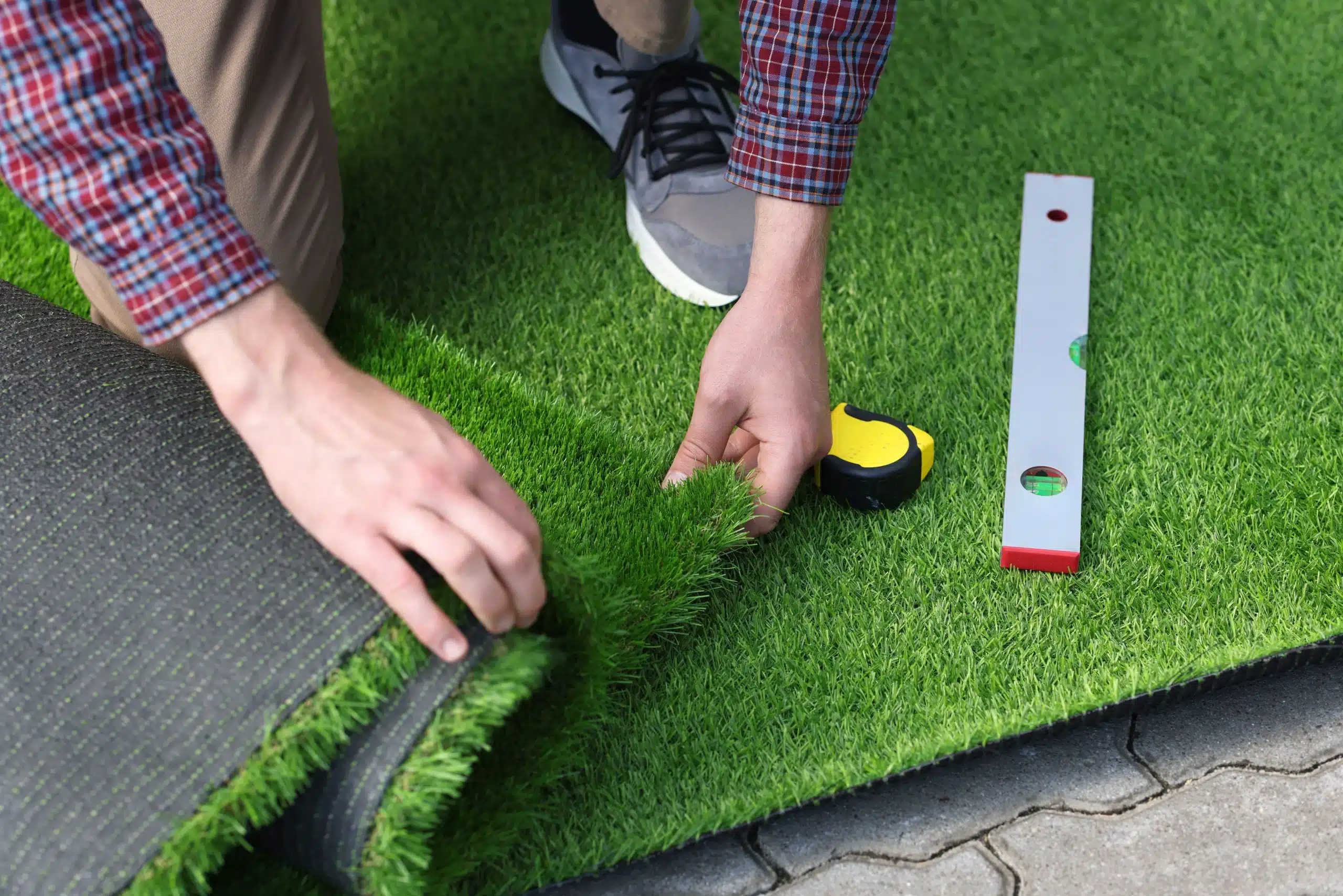
Artificial Grass of Cypress approaches maintenance and repair from a diagnostic position. The first step for any repair engagement is surface assessment: seam integrity, infill distribution, fiber condition, drainage outlet function, and edge stability are documented before any corrective scope is planned. That assessment determines whether the issue is surface-correctable through grooming, infill rebalancing, and targeted seam repair, or whether the base and drainage layer have failed in ways that require more substantial intervention.
Seam failures in Cypress master-planned community properties are the most frequent repair category. Seams in high-stress positions—near outdoor furniture traffic zones, at grade transitions adjacent to patio edges, or in pet-run perimeter positions—experience concentrated lateral stress that standard seam adhesive eventually can't hold. In properties with base drainage issues, seam stress is amplified by base movement during soil saturation and contraction cycles. Seam repair that doesn't address underlying base drainage behavior is a temporary fix.
For Bridgeland, Towne Lake, Fairfield, and Coles Crossing properties, maintenance and repair scope is subject to the same ARB notification requirements as original installation. We confirm community requirements before scheduling corrective work to prevent the compliance issues that can arise when maintenance work is visible from the street or common areas.